Beyond Brackets: Why Power Level Needs More Than a Number on a Card
February 27, 2025
The WotC bracket system was a step in the right direction. But brackets evaluate cards, not decks— and that distinction matters more than most players realize. We ran three real Bracket 4 decks through ScryCheck. The results tell the story.
Brackets were supposed to fix this
Before brackets, the pregame conversation was basically vibes. “I’m playing a 7” meant nothing because there was no shared definition of what a 7 was. Wizards’ bracket system tried to fix that by creating tiers based on which specific cards are in the deck — Game Changers like Mana Crypt, Demonic Tutor, and Smothering Tithe push you into higher brackets.
The problem is that a deck is more than a list of individual cards. Two decks can contain the exact same bracket-defining staples and still play completely differently, because the restof the deck — the synergy, the curve, the density of interaction, the combo potential — determines how a game actually feels.
Brackets can tell you that a deck contains powerful cards. They can’t tell you whether those cards are in a focused shell that’s trying to win on turn 4 or a slow, durdly pile that’s just running staples because the player owns them.
Three Bracket 4 decks. Three very different games.
These aren’t hypotheticals. These are real decks from the ScryCheck deck library, all classified as Bracket 4. Look at the power level spread.
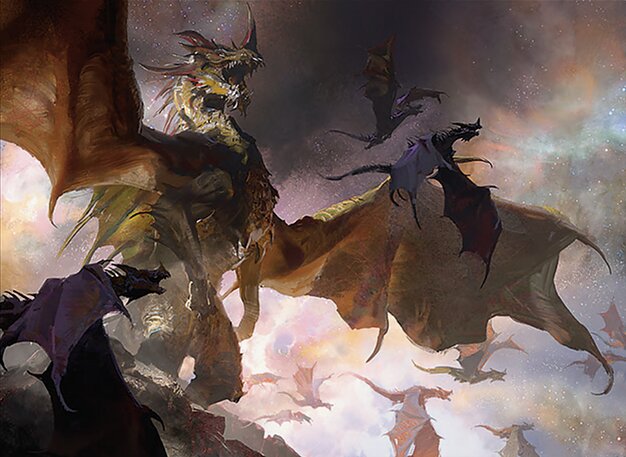
The Ur-Dragon — Dragon TribalPower 5.1
Five colors of big dumb dragons. The game plan is to ramp, slam haymakers, and turn them sideways. No combos. Interaction is light — the deck would rather add another dragon than hold up a counterspell. It ended up in Bracket 4 because it runs enough individually powerful staples to cross the Game Changers threshold, but the overall construction is firmly casual.

Kaalia of the Vast — Angels, Demons & DragonsPower 7.5
Kaalia decks have a reputation for a reason. This one is tuned: strong interaction suite, efficient threats, and a couple of combo lines to close games. The mana base is tight. It’s not cEDH, but it’s going to dominate a table full of upgraded precons. You’d know that immediately from the power level. You’d have no idea from the bracket alone.
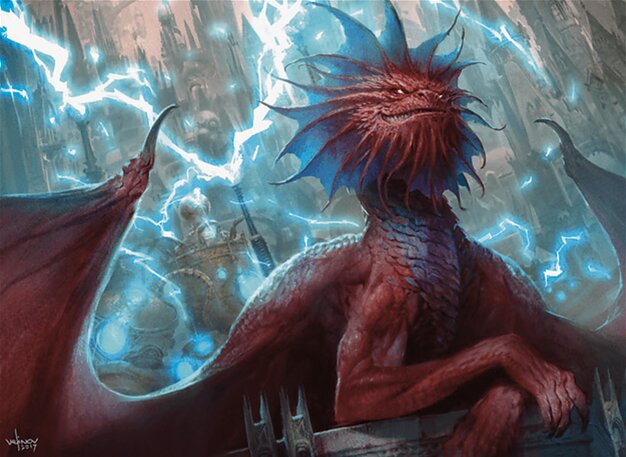
Niv-Mizzet, Parun — Combo ControlPower 8.5
This is a different animal. High consistency, overwhelming lethality, and 26 combo lines including Niv-Mizzet + Curiosity for instant wins. Every slot is working toward the same goal: assemble a combo, protect it, win. This deck will end games that the Ur-Dragon build is still ramping into.
The bracket system gives all three decks the same label. But anyone who’s played Commander can feel the difference between sitting across from a dragon tribal deck and a Niv-Mizzet combo deck. The vectors make that gap visible:
Quick note on the table: Speed measures how quickly a deck develops meaningful pressure and game actions. It is not a pure goldfish “wins by turn X” metric.
| Ur-Dragon | Kaalia | Niv-Mizzet | |
|---|---|---|---|
| Speed | 68 | 66 | 64 |
| Consistency | 83 | 69 | 94 |
| Interaction | 63 | 88 | 67 |
| Mana base | 95 | 91 | 86 |
| Threats | 45 | 97 | 99 |
| Combos | 0 | 2 | 26 |
| Power Level | 5.1 | 7.5 | 8.5 |
| Bracket | 4 | 4 | 4 |
The Ur-Dragon has a great mana base and decent consistency, but its Threats score is 45 — it wins by attacking, not by comboing. Kaalia has strong interaction and high threat density but lower consistency. Niv-Mizzet is built around 26 combo lines with peak consistency and lethality — every line of the deck funnels into a Curiosity-fueled win. These are three fundamentally different decks that the bracket system can’t distinguish.
The B3 version of this problem is worse
The three decks above are honest actors. The players built what they wanted to build, ran enough staples to cross the Game Changers threshold, and ended up in Bracket 4. The variation is real, but nobody engineered it.
The same gap exists acrossthe B3/B4 boundary — and there it can be deliberate.
Consider this deck, submitted to ScryCheck with the name “Azula on the Hunt — Aristocrat (B3).” Note the explicit bracket label baked into the title.
The deck contains exactly 3 Game Changers: Demonic Tutor, The One Ring, and Orcish Bowmasters. That is within the Bracket 3 allowance, but the count alone does not establish its bracket. Expected turns played, combo frequency, and the intended play experience matter too.
Now look at what else is in it:
- Sanguine Bond + Exquisite Blood — a 2-card infinite that fires on any life gain
- Dark Ritual and Cabal Ritual for explosive early mana
- Sheoldred, the Apocalypse
- Toxic Deluge, Deadly Rollick, Reanimate
- A full lifedrain engine: Vito, Epicure of Blood, Marauding Blight-Priest, Gray Merchant
ScryCheck rates it at power level 7.2— the same territory as the Kaalia deck above at 7.5. But Kaalia is Bracket 4. This deck is claiming Bracket 3.
The player knew exactly what they were doing. The deck was built to sit at precisely 3 Game Changers while maximizing everything else: combo redundancy, fast mana, premium removal, a drain engine that closes games quickly. The bracket label isn’t a description of how this deck plays — it’s a credential, chosen to get a seat at a lower-power table.
This is the gap that a bracket alone can’t close. The bracket says B3. The power level says something different. Anyone who sat across from this deck in a B3 pod would feel it immediately.
It’s not the card — it’s the shell
Here’s the thing that brackets fundamentally can’t capture: the same card does different things in different decks.
Smothering Tithe in the Ur-Dragon deck is generating treasures to help cast 7-drops a turn earlier. Smothering Tithe in a stax deck alongside Winter Orb and Armageddon is part of a resource denial lock that prevents opponents from playing the game at all. The bracket system sees the same card in both cases. A player sitting across the table will not have the same experience.
Or think about Sol Ring. Almost every Commander deck runs it. In a precon, it helps you cast your commander a turn early. In a cEDH deck, it’s enabling a turn-2 combo setup. The card is identical. The context is everything.
This is the gap that multi-dimensional analysis fills. Instead of asking “does this deck contain Sol Ring?” (yes, they all do), it asks “what is this deck doing with its speed, its tutors, its interaction, and its win conditions taken together?”
What the bracket system gets right
To be clear: brackets aren’t useless. Knowing that a deck contains Game Changers — Mana Crypt, Demonic Tutor, Gaea’s Cradle — is genuinely useful information. Those cards have outsized impact and it makes sense to flag them. The bracket system gives players a starting point.
The issue is that people treat brackets as the endingpoint. “We’re all Bracket 3? Cool, let’s shuffle up.” And then someone’s tuned Yuriko deck runs over a table of upgraded precons that are also technically Bracket 3, and nobody has a good time.
The fix isn’t to throw brackets away. It’s to use them alongside a power level that reflects the whole deck, not just a handful of individually powerful cards.
Better data, better games
Compare these two pregame statements:
“I’m playing Bracket 4.”
“I’m on Ur-Dragon, power 5.1, Bracket 4. It’s dragon tribal — no combos, light interaction, wants to reach the late game.”
The second one takes ten seconds longer and tells you everything you need to know about whether this deck belongs at your table. Now imagine the other player responds: “I’m on Niv-Mizzet, power 8.5, also Bracket 4. Combo control, 26 lines, peak consistency.”
Suddenly the bracket match doesn’t look so great. And that’s exactly the kind of mismatch that ruins games. You don’t need to agree on a power scale to recognize a 3.4-point gap.
The Rule 0 conversation doesn’t need to be a negotiation. It just needs better data.
Want to see where your deck falls? ScryCheck scores Commander decks across five vectors so you can see exactly how it plays, not just what’s in it.
Analyze your deck →