Bracket 3 Isn’t One Thing Anymore
June 1, 2026
Bracket 3 has become Commander’s biggest tent — a label so wide it covers decks with almost nothing in common. Five real examples of where the system shows its seams.
What turn should a Bracket 3 deck win by?
If you’ve spent any time on r/EDH recently, you’ve seen this argument. Someone wins on turn 6 with a legal 3-card combo, no interaction gets pointed at them, and the table says “that isn’t Bracket 3.” The winner feels guilty. The losers feel cheated. Everyone was technically following the rules, and the game was still mismatched.
This keeps happening because Bracket 3 has become the biggest tent in Commander. It covers everything from an upgraded precon with a single Game Changer to a tuned spellslinger shell one decimal point below Bracket 4. Those two decks share a label. They do not share a table experience.
The bracket system is not broken. But it was designed as a conversational starting point, and a lot of players are treating it as a complete power model. When you do that, the gaps start to show — and they show up most clearly in Bracket 3.
Here are five real decks that illustrate why.
A low Bracket 3 deck

Tidus, Yuna's Guardian



Win turn 9 · Game Changers: 1 (Farewell) · Combos: 0
This is what most people picture when they hear “Bracket 3.” An upgraded counters deck with one Game Changer, no combos, a turn-9 clock, and a plan that amounts to “grow creatures, swing.” If someone sat down and said “this is Bracket 3,” you’d know roughly what the game was going to feel like. Markers match table experience. The system works here.
A high Bracket 3 deck

Voja, Jaws of the Conclave

Win turn 7 · Game Changers: 3 (Teferi's Protection, Gaea's Cradle, Aura Shards) · Combos: 0
Voja is also Bracket 3 — three full Game Changers, sitting 0.2 below the Bracket 4 power threshold. Almost three full power points higher than the Tidus deck.
Three Game Changers is the maximum a deck can have and remain in Bracket 3, and the ones here are legitimate: Gaea’s Cradle, Teferi’s Protection, Aura Shards. No combos. No mass land denial. No extra turns. Under a marker-first reading, Bracket 3 is completely defensible.
But this is a highly tuned elf tribal shell. Fourteen mana dorks, Gaea’s Cradle and Nykthos for explosive mana, Heroic Intervention, Flawless Maneuver, and Deflecting Swat for protection, and Craterhoof Behemoth or Finale of Devastation to close. The typical win is turn 7, with turn 5 available on a strong draw. The power comes from construction density, not from anything on the Game Changers list.
The owner could honestly say “it’s Bracket 3” and not be lying. But if the rest of the table hears “Bracket 3” and imagines the Tidus deck, the game is going to feel wrong. That isn’t anyone’s fault. It’s just a label doing too much work.
This is the gap r/EDH has already noticed. “High 3 / low 4” has become the new pregame shorthand at a lot of LGSes — which really just means the bracket alone isn’t enough information. As one commenter put it: “most people are playing bracket 2, but they’ve just added a couple of game changers and are calling it bracket 3.”
The B3/B4 no-man’s-land
Some decks are too sharp for a normal B3 table but too linear or fragile for real B4. They can combo off if left unchecked, but they fold to a single piece of interaction aimed at the commander. Glass cannons: explosive when everything lines up, dead weight when it doesn’t.
The Reddit thread was full of this archetype. A Mikaeus combo deck with rituals and fast mana wins on turn 6. The table complains. Someone else says “if your deck can’t deal with a 6-mana commander and 3 combo pieces on board, it’s probably not actually Bracket 3.” Someone else responds: “the deck can pull T4 lines — how much interaction should B3 decks run to stop four combos at turn 4?”
Both of those takes make sense. That’s the problem. When a deck exists in the gap between two brackets, the bracket system forces a binary choice that doesn’t fit. You either round down and risk pubstomping, or round up and get blown out by actual B4 decks. The Reddit consensus — to the extent there is one — seems to be that these decks need more context than a number can provide. “It’s a high 3 that wins around turn 6–7, but it folds to removal” tells you more than “Bracket 3.”
The extreme case: “only three Game Changers”

Tymna the Weaver / Kraum, Ludevic's Opus

Win turn 4 · Game Changers: 3 (Underworld Breach, Smothering Tithe, Rhystic Study) · Combos: 5
A player recently argued that this deck was Bracket 3 because it runs exactly three Game Changers. That is the maximum number many players associate with B3, and it is the easiest part of the bracket system to audit. You can count the highlighted cards and say: “See? Three.”
But Game Changer count is not power level. The 97 other cards in this deck include six rituals and free mana pieces, ten tutors, six pieces of free interaction, and three compact 2-card win lines — none of which appear on the Game Changers list. The bracket system isn’t looking at any of them, but they’re why the deck wins on turn 4.
The “only three Game Changers” argument is the cleanest version of what might be called checklist lawyering. It focuses on the one dimension that’s easiest to satisfy and ignores the dimensions that actually determine how the game feels. None of the fast mana is on the Game Changers list. None of the tutors (other than the ones that happen to be GCs) trigger a bracket gate. None of the free interaction counts. The 97 other cards in the deck are doing the heavy lifting, and the bracket system isn’t looking at them.
This is the extreme end of the spectrum, and most players would recognize it immediately. But the same incentive — optimize around the visible markers, ignore the invisible ones — exists at every power level. It’s just louder here.
The reverse problem
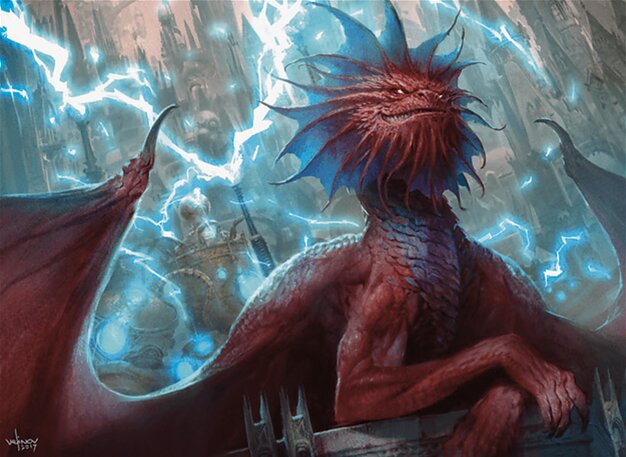
Niv-Mizzet, Parun
Win turn 8 · Game Changers: 2 (Jeska's Will, Thassa's Oracle) + MLD (Magus of the Moon) · Combos: 1
The gap cuts both ways.
This Niv-Mizzet deck is Bracket 4 because it includes Magus of the Moon, Thassa’s Oracle, and Jeska’s Will — markers that matter and that a table would want to know about. But the rest of the list is a casual spellslinger build with a heavy curve, lots of 4- and 5-drops, and a typical win around turn 8. It’s a power-5 deck wearing a Bracket 4 label.
The Reddit thread had a version of this too: “even if I add Game Changers to my wall tribal Arcades deck, that doesn’t magically make it able to compete in a B4 space. At the end of the day it’s still vastly reliant on its commander and has to win through normal combat damage.”
A single scary marker can make a moderate deck sound more dangerous than it is. Bracket skepticism shouldn’t only flow in one direction.
When the label works
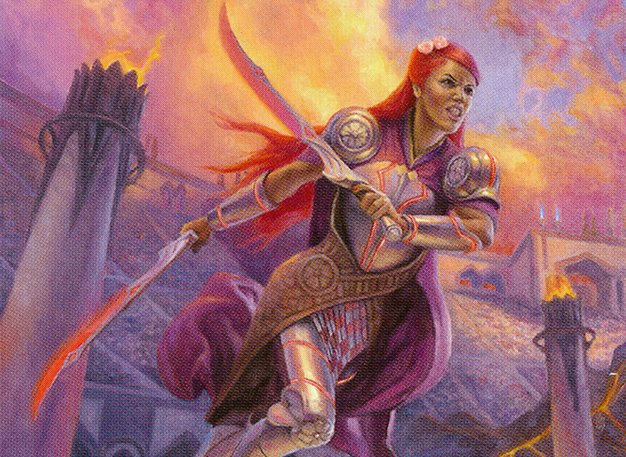
Najeela, the Blade-Blossom
Win turn 4 · Game Changers: 21 · Combos: 4 (2-card)
For contrast: a deck where the bracket label does exactly what it’s supposed to do. 21 Game Changers, compact combo lines, premium tutors, free interaction, turn-4 wins. No one is arguing this is Bracket 3.
The bracket system is not useless. When markers are dense enough, they tell you a lot. The issue is that most decks don’t have 21 Game Changers. Most decks live in the messy middle — Bracket 3 with anywhere from 0 to 3 markers and wildly different levels of tuning — and that’s where the label stops being sufficient.
What the gaps have in common
These five decks show different failure modes, but they all point at the same thing: the bracket system tracks what’s easy to count.
Niv-Mizzet (B4, 5.0) sits below Voja (B3, 6.8). The bracket and the power level are pointing in opposite directions.
Game Changers, mass land denial, 2-card combos, extra turn spells — these were chosen because they’re visible and unambiguous. They’re real signals. But what determines whether a game feels right isn’t just which cards are present. It’s how fast the deck wins, how consistently it finds its line, and how much interaction it has to protect that line once it’s there.
Win turn is the single most underrated piece of pregame context. A turn-9 deck and a turn-6 deck are trying to play different games, and if the pregame conversation stops at the bracket number, no one knows that. Tutors are similar — one in a casual list is redundancy, but eight in a combo shell means the deck has that line available most games. That’s a different thing, and brackets don’t distinguish between them.
Most decks aren’t that extreme. But the same dynamic shows up everywhere: focus on the markers, not the systems behind them. And the gap between what the bracket captures and what the game actually feels like is widest in Bracket 3, because B3 has the most range to hide in.
This is why “high 3 / low 4” has become the informal standard at a lot of tables. Players are instinctively reaching for a continuous scale — not just a category, but a position within the category. A bracket tells you which bucket the deck is in. A separate power rating tells you where in the bucket it sits. The two together give you something closer to a full picture.
What actually helps at the table
The most useful pregame descriptions in the Reddit thread weren’t bracket numbers. They were things like:
“It’s a high 3, maybe a low 4, it takes around 7 turns, but 6 isn’t a crazy surprise.”
That sentence tells the table what kind of game to expect, where the deck’s ceiling is, and implicitly whether interaction is worth packing. No one needs a spreadsheet — just a sentence.
The bracket gives you a ballpark. The sentence tells you which part of the ballpark. “It’s B3, wins around turn 8, no combos.” “High 3, commander-centric combo, folds to removal.” “Technically B4 on markers but it’s a slow deck — the curve is high and the mana base is rough.” None of those are long. All of them do more than the number alone.
The real problem
Most mismatched Commander games aren’t caused by one person cheating the system. They’re caused by four people hearing the same label and picturing four different decks.
Bracket 3 right now covers upgraded precons with one Game Changer and a turn-9 clock, tuned spellslingers with free interaction and a turn-6 clock, glass cannons that combo fast but fold to a single removal spell, and — if you’re willing to squint at Game Changer count — fringe cEDH decks that win on turn 4. That’s too much range for one label. Not because the label is wrong, but because it was never designed to carry all of that alone.
The bracket system is genuinely better than what came before. “My deck is a 7” was a meaningless number that everyone applied to themselves. Brackets at least give players something concrete to point at — real cards, real categories, real gates. They catch obvious warning signs. They started a conversation that was worth having.
But the conversation was always supposed to keep going. The player in the Reddit thread who said “it’s a high 3, maybe a low 4, wins around turn 7, but 6 isn’t a crazy surprise” was doing exactly what brackets were designed to prompt — using the number as a floor and then saying the part that actually mattered.
The bracket is one sentence. The game usually takes another one.
Run your deck through ScryCheck to see your bracket, power level, and the dimensions brackets don’t capture — win turn, combo count, tutor density, and more.
Analyze your deck →